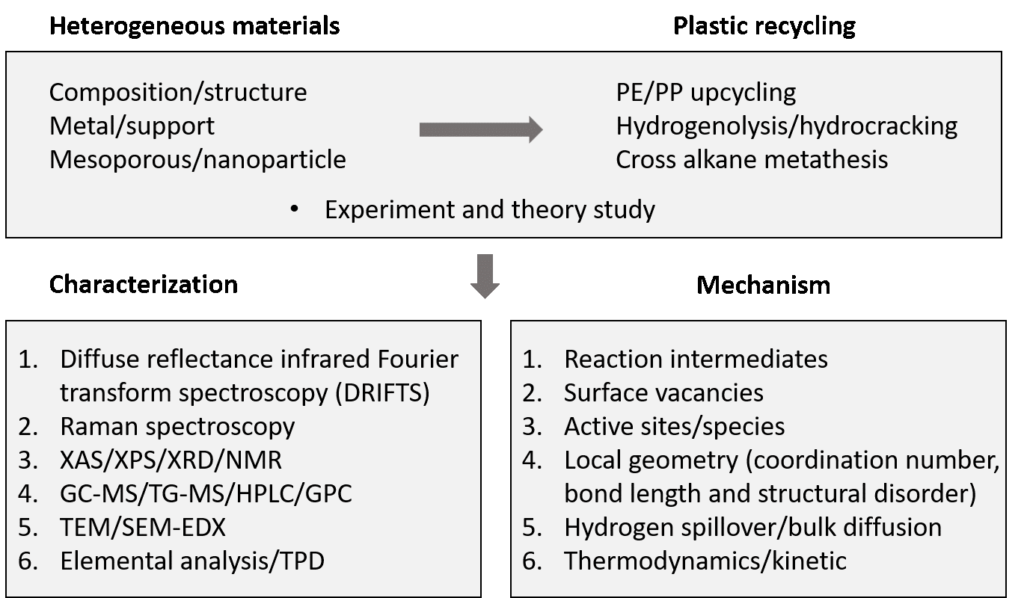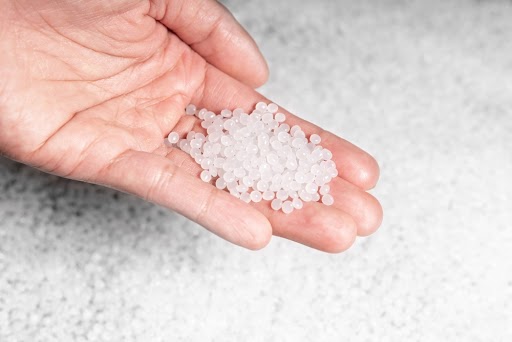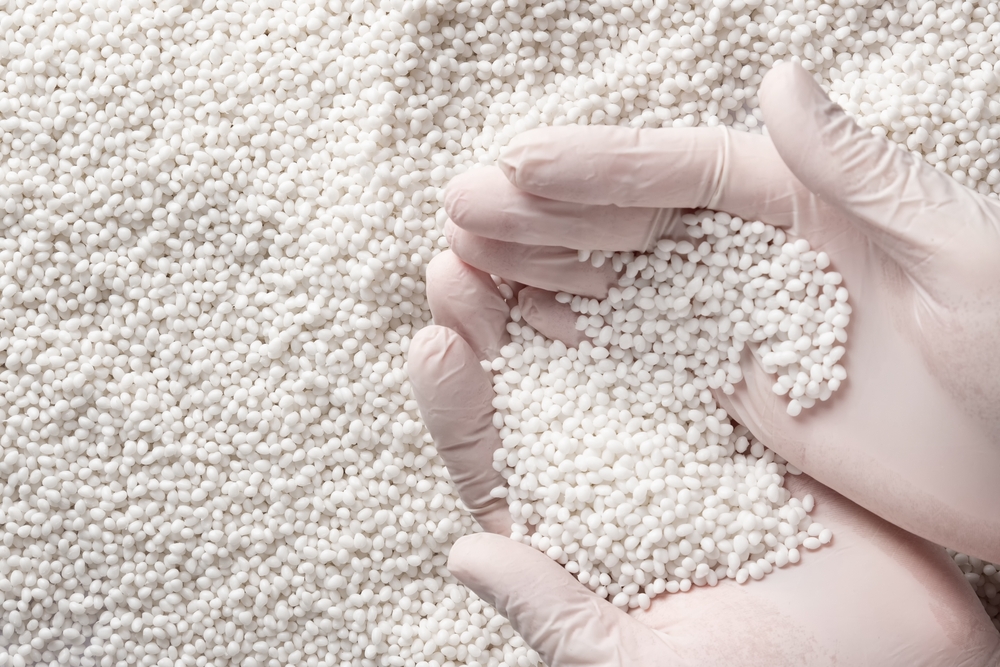
Hydrogenolysis and hydrocracking [1] are attractive polymer upcycling methods to produce low molecular weight liquid hydrocarbons with narrow molecular weight distributions under relatively mild conditions. In this project, we aim to develop heterogeneous catalyst materials to selectively convert waste PE/PP towards a well-defined mixture of saturated short-medium hydrocarbons (e.g., C6-C18).
To acquire the necessary insights into the mechanism of plastics conversion, we will also employ a wide variety of spectroscopy methods [2] to study catalyst materials for PE/PP conversion, including vibrational spectroscopy (UV-Vis-NIR spectroscopy and XPS), and X-ray spectroscopy (e.g., X-ray absorption near-edge spectroscopy), as well as microscopy methods (e.g., scanning and transmission electron spectroscopy).
[1] J. Wei, J. Liu, W. Zeng, Z. Dong, J. Song, S. Liu, G. Liu, Catal. Sci. Technol., 2023,13, 1258-1280.
[2] M. J. Werny, F. Meirer, B. M. Weckhuysen, Angew. Chem. Int. Ed. 2024, 63, e202306033.
Plastic recycling, waste plastics, hydrogenolysis, hydrocracking, spectroscopy and microscopy
Co-organised jointly by the European Commission, DG RTD, Directorate B, Unit B1 ‘Green Transitions
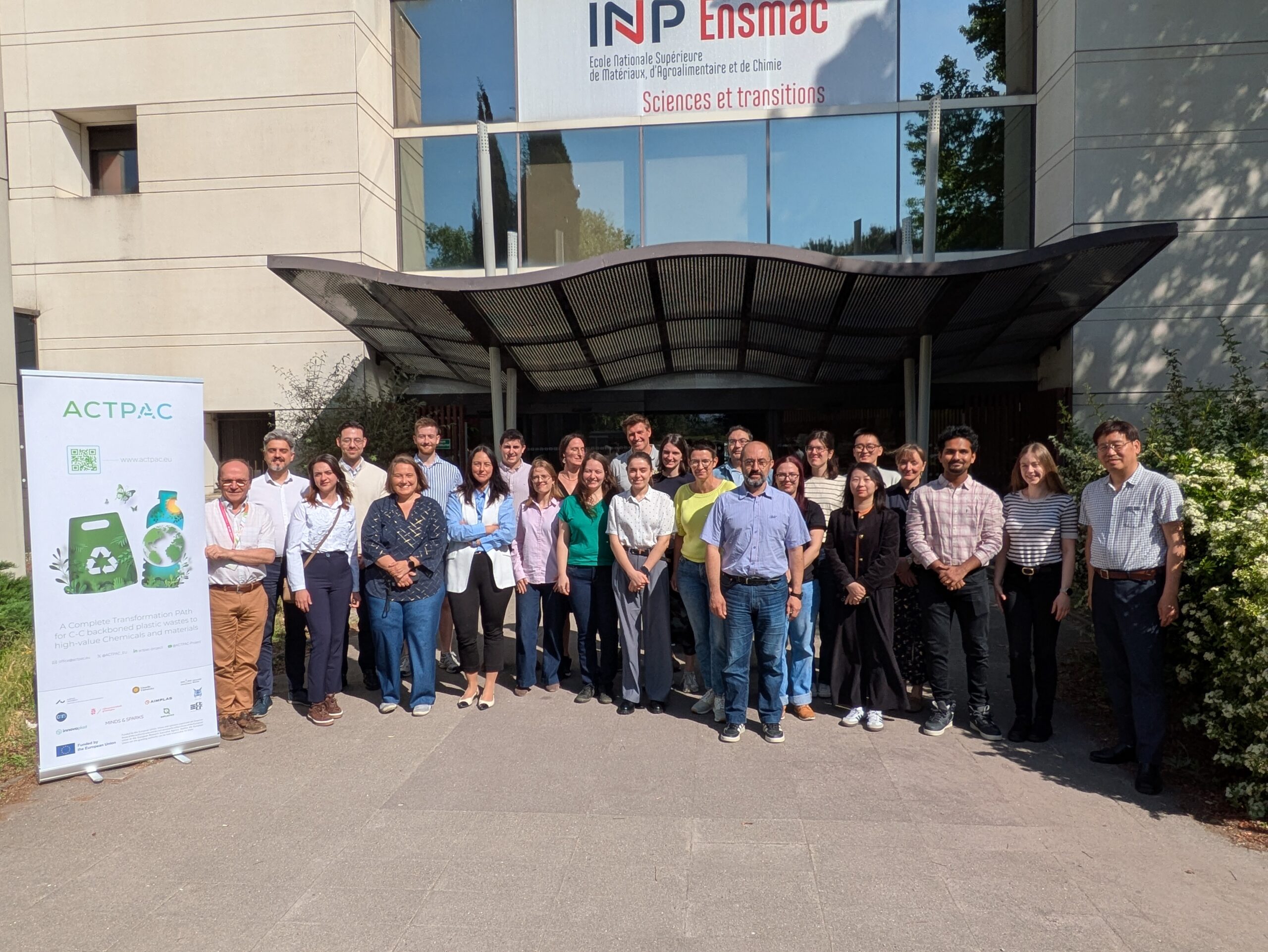
The second in-person ACTPAC consortium meeting took place on April 24–25 in the beautiful city of